Link

PDF of Abbé Warre's Beekeeping for All

The full 12th edition translated into english by David Heaf (one of the more prominent modern day users of the the warré hive.)

The book covers a bit of beekeeping basics, Warré's analysis of some of the different hives of his time, a few interesting observations of bee behaviour in addition the specifications and rational behind his own hive design. Many interesting things in here even if you are an experienced beekeeper with no interest in using a warré hive.

If you assume it's not possible to put natural comb without frames in an extractor have a look at page 63.

In the 5th edition warré discussed the option of using frames in his style of hive.

There's another video in which David Heaf goes through the different pieces used in this hive and some of his construction methods that is worth watching as well:

Handy chart showing the relationship between the development time for new queens, swarming and hive population.

The important thing to remember about queen development is it can take about a month from an egg in a queen cell till that egg turns into a mated laying adult queen. I have personally seen new queens laying in the range of 25-32 days from queen egg being laid. Others say 28 days plus or minus five days.

During that time:

  • Population will decrease due to the swarming bees leaving
  • Then population will increase for three weeks as existing brood emerges
  • Then population will decrease for three weeks as brood from the new queen develops into adults.See the pdf version of the chart below.

swarm calender

Link

PBS Nova Tales From the Hive

Some stunning cinematography in the PBS documentary that follows the life of a hive through the season. It's a great way to pick up some of the basics on bees, but even if you're already familiar with the information coverd the video is of interest for all the stunning close-ups, including scenes of the mating flight of the queen.

There is also an interesting 'making of' article that explains how these images were captured.

I used two crushed combs from a warré to make a small candle in an improvised solar melter. Here's a quick overview of the process:

Materials

A couple of discarded waxed paper coffee cups, an appropriate sized candle wick, a small cooler, a window, a few small sticks, a small piece of cloth or old window screen, a black garbage bag, and an elastic.
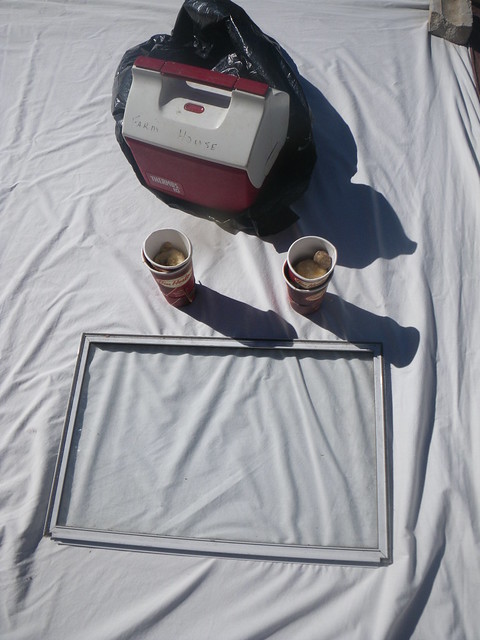
beeswax solar candle making materialsPhoto by: Shawn Caza / CC: Attribution-NonCommercial-ShareAlike License

Separate the wax from the remaining honey

The first melting is all about trying to make your wax as pure as possible.

  • Cut the bottom out of coffee cup A.

  • Place cloth on the bottom of cup A with an elastic.

  • Poke small holes in the sides of cup B above the estimated needed wax capacity and slide a small stick into the holes.

  • Rest cup A full of wax on top of the stick inside of cup B.
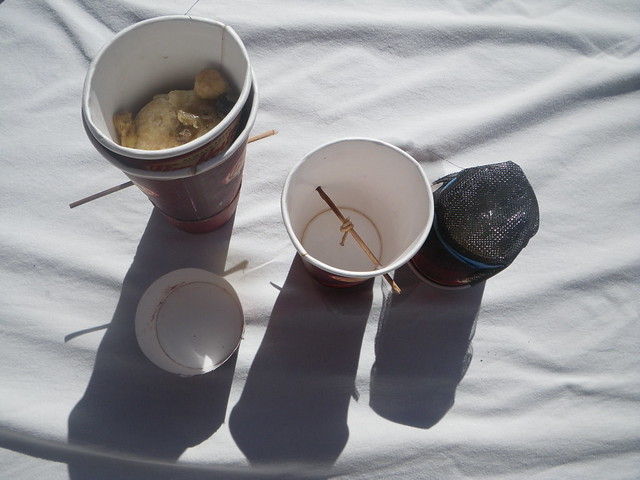
candle filter and moldPhoto by: Shawn Caza / CC: Attribution-NonCommercial-ShareAlike License

  • Place the cooler inside the garbage bag, the cups inside the cooler. Then place the window on top in full sun.

beeswax solar melterPhoto by: Shawn Caza / CC: Attribution-NonCommercial-ShareAlike License

The cloth should keep most propolis and debris in the top cup.

beeswax candle filterPhoto by: Shawn Caza / CC: Attribution-NonCommercial-ShareAlike License

Once cooled all the wax will float to the top with the honey on the bottom of cup B. Though I crushed the comb and let it strain for over a week I was surprised to see there was still more honey than wax left after melting. This photo shows how much of each I ended up with:

wax vs honeyPhoto by: Shawn Caza / CC: Attribution-NonCommercial-ShareAlike License

Making the candle

I make the candle following a similar process as described above except a wick is added. Using the right sized wick for the size of the coffee cup is essential for the candle to burn properly.

  • This time a small hole is made in the centre of the bottom of cup b.

  • Thread the wick through the hole and use a knot to keep the end from passing through the hole.

  • You can use an additional cup to catch any wax that might pass through this hole, but if you keep the hole tight and keep the wick knot snug against it, the wax will not drip through.
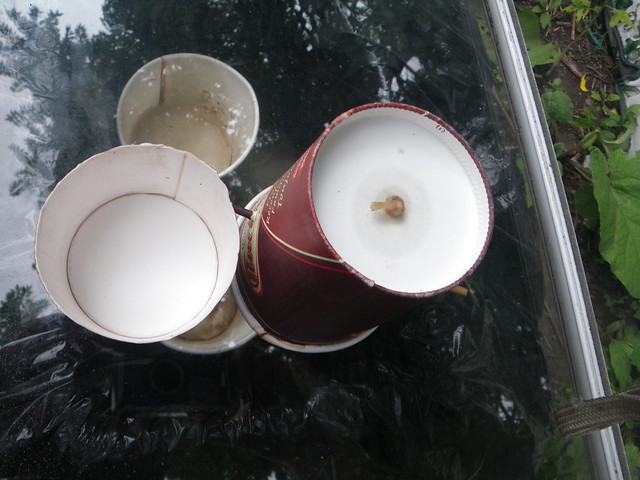
candle making moldPhoto by: Shawn Caza / CC: Attribution-NonCommercial-ShareAlike License

  • Tie the other end of the wick to the centre of the stick.

Once the wax has all melted into cup b allow the wax to cool slowly. If it cools to quickly the wax may crack. Then rip the cup away from the wax.
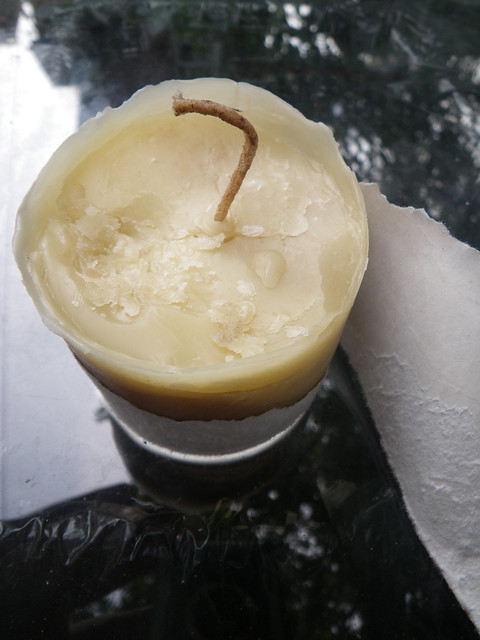
ripping away beewax candle moldPhoto by: Shawn Caza / CC: Attribution-NonCommercial-ShareAlike License

Trim the wick as necessary.
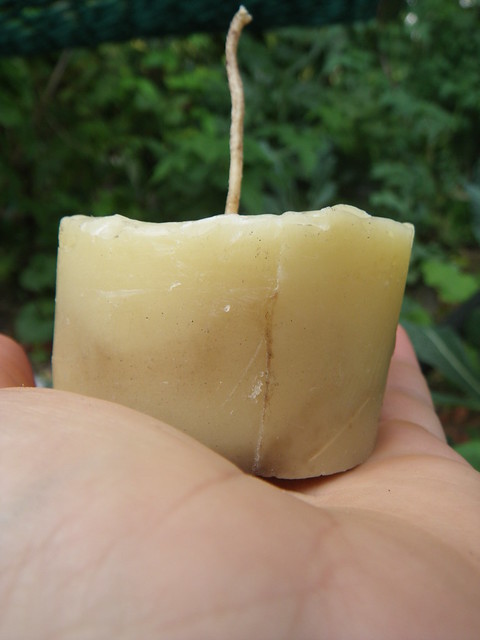
holding candlePhoto by: Shawn Caza / CC: Attribution-NonCommercial-ShareAlike License

Enjoy your candle.

beeswax candle flamePhoto by: Shawn Caza / CC: Attribution-NonCommercial-ShareAlike License

People use all sorts of things to filter their wax. The cleaner you can get it the better it will burn. A doubled up window screen might give you a working candle if your wax is fairly clean to begin with, but a cotton cloth or paper towel will result in a candle that burns brighter. The below photo shows the difference in in brightness between candles made with different degrees of filtering.

beeswax candle light comparisonPhoto by: Shawn Caza / CC: Attribution-NonCommercial-ShareAlike License

Link

Opening keynote address by Phil Chandler at the 2012 Natural Beekeeping Conference

Phil does a bit of talking but it quickly changes from a speech to an interesting open discussion.

Topics touched include: comb size/space, normal colony drone levels, varroa preditors,

Link

Beekeeping by Rotation System from Celle Germany

A little while back I put out some requests on the web for ideas on how to keep hive numbers steady for locations where there is a limited amount of space for reproduction and it was suggested to me that I look at the Dutch Aalster method, or the Rotation method from Celle, Germany.

What little english info I able to find on these approaches suggests it is really a method for disease/pest control that is designed to keep productive populations during flows while creating breaks in the brood cycle and cycling out old comb from the brood nest. Though many variations seem to exist, the most detailed information on the approach comes in the form of this IWF documentary.

1

There are a few different reasons why bees will fan their wings. They may be regulating temperature and humidity in the hive.

On hot days you will see bees at the front entrance moving air through the hive and cooling things down. The hive in the video above had two full supers of nectar, the extra airflow from the fanning helps reduce the moisture content of the nectar and cure it into honey.

In other instances they may fan their wings to help broadcast the nasonov pheromone. A few of the bees with their nasonov gland exposed are identified in this photo:

Bees exposing their nasonov gland

Bees stick their butts in the air and bend the last segment of their abdomen down to expose the gland. Here's a video of the same hive as in the photo above. See how many bees you can spot sending out the pheromone.

In this case the fanning bees are calling back a large group of bees that had been shaken out of the hive during an inspection. Similar behaviour occurs at a hive entrance when a swarm first reaches a new home, after orientation flights, or when a queen departs on a mating flight. A few more details about the nasonov gland can be found here.